


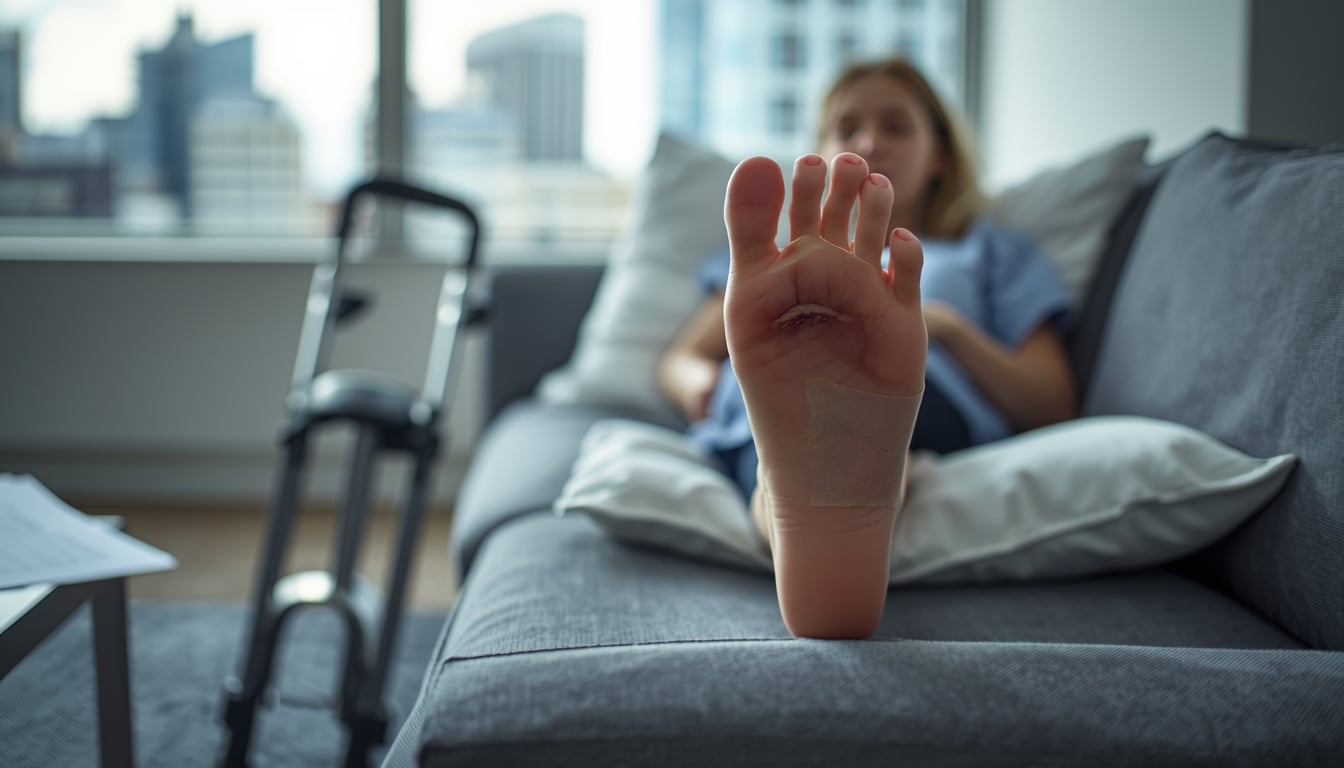
If you’re considering bunion surgery, your biggest question is probably not “what’s the name of the procedure?”
It’s: “How long am I going to be out of commission?”
And right behind that: “How painful is recovery?” and “Will I be able to walk?”
Let’s make this simple and honest.
At Prestige Podiatry Care, we offer no-hardware minimally invasive bunion correction for appropriate candidates—performed in our office surgical suite in Stamford, often with a local anesthesia, comfort-first approach. Your exact recovery depends on your anatomy and the correction needed, but most patients benefit from having a clear timeline and expectations from day one.
If you want to see candidacy and what the procedure is designed to do, start here:
→ No-Hardware Minimally Invasive Bunion Surgery in Stamford, CT
First: what recovery is actually about
Recovery isn’t just “waiting for pain to go away.”
Recovery is:
- controlling swelling
- protecting alignment
- gradually restoring normal walking mechanics
- avoiding the common mistakes that delay healing
Minimally invasive techniques are designed to reduce soft-tissue disruption for the right patient, which often improves the recovery curve—but it’s still a real recovery.
A realistic, week-by-week recovery guide
(This is a general guide—your plan may be different based on your correction and healing response.)
Week 0–1: The “protect and calm down” phase
What you may feel
- swelling (normal)
- soreness and tightness
- fatigue (your body is healing)
What matters most this week
- protecting the correction
- keeping swelling under control
- following walking and footwear instructions exactly
Common mistake
Doing “a little extra” because you feel okay on day 3–4. Swelling often spikes when people overdo it early.
Week 2: The “I’m better… but still swollen” phase
This is where people get mentally frustrated.
What’s normal
- swelling that lingers
- sensitivity in shoes
- good days and annoying days
The goal
Continue protecting alignment while gradually increasing functional movement as directed.
Weeks 3–4: The “more functional walking” phase
Many patients start feeling more like themselves here—still not 100%, but noticeably improved.
What’s typical
- improved day-to-day walking comfort
- swelling that’s still present but trending down
- increased confidence in mobility
What matters
Consistency. Recovery responds well to a steady approach, not random bursts of activity.
Weeks 5–6: The “back to routines” phase
This is often when people start thinking about:
- returning to more structured exercise
- longer walking days
- travel and social plans
Reality check
You may be capable of more—but swelling can still flare with heavy activity. Progress should be incremental and intentional.
Weeks 7–12+: The “refinement” phase
Even after you feel “fine,” your foot is still:
- remodeling
- adapting to new alignment
- rebuilding endurance
This is where you go from “able to walk” to “walking confidently and comfortably.”
How to know if you’re healing normally (vs not)
Normal recovery signs
- swelling that fluctuates but trends downward over weeks
- soreness that improves with rest and elevation
- gradual improvement in walking comfort
Red flags (call us)
- increasing redness, warmth, or drainage
- fever or chills
- pain that escalates sharply rather than gradually improving
- sudden significant swelling or calf pain
If something feels off, don’t “wait it out.” Early evaluation prevents bigger issues.
Why patients like the office surgical suite + local anesthesia approach
A big reason people postpone bunion surgery is fear—of hospitals, anesthesia, and the unknown.
Our Stamford office setup is designed to feel:
- private
- calm
- organized
- comfort-first
And when local anesthesia is appropriate, it can reduce the “big surgery” feeling for many patients—without compromising a thoughtful plan.
Is minimally invasive bunion surgery right for you?
No-hardware minimally invasive correction can be an excellent option for appropriate candidates, but the key word is appropriate.
Your consult helps us determine:
- bunion severity and flexibility
- joint health (arthritis vs alignment)
- stability needs
- what correction will actually hold up long-term
If you want the full candidacy breakdown, procedure overview, and what “no hardware” means in our approach, visit:
→ No-Hardware Minimally Invasive Bunion Surgery in Stamford, CT
Book a consultation in Stamford
If bunion pain is limiting your shoes, walking, or daily life, the next step is simple: get evaluated and get clarity.
Prestige Podiatry Care
1250 Summer Street, Suite 302, Stamford CT 06905
Call: 203-563-8383